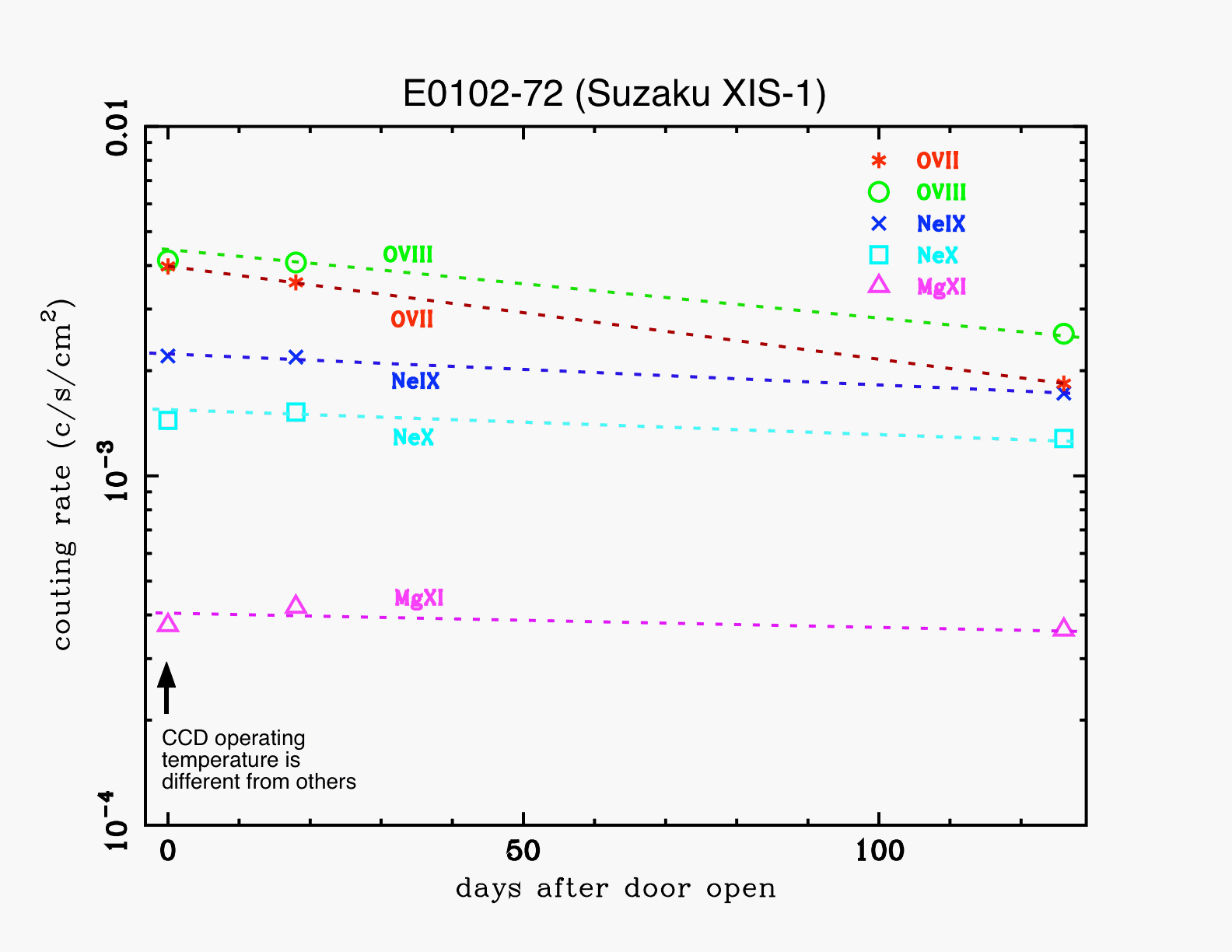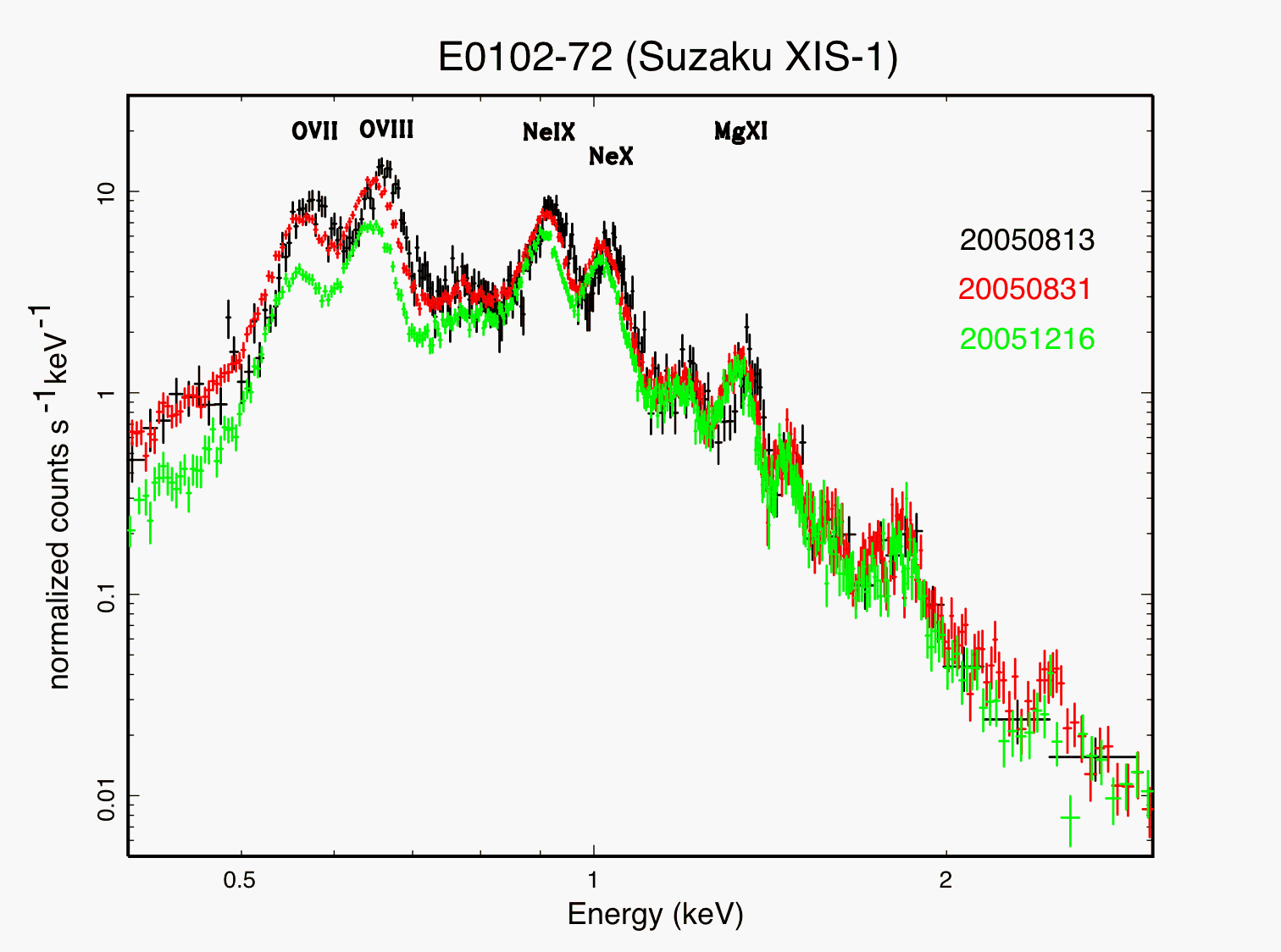
The good low energy response of the back illuminated (BI) CCD, i.e. the high detection efficiency and the gaussian-like good energy spread function, is an important unique feature of Suzaku. However, we recently found evidence that the effective area below 1 keV of both back- and front-illuminated sensors is decreasing with time (see figures). On the average at 0.6 keV the effective area is about 50% that just after launch. We are working hard to understand the cause of decrease and to find possible recovery methods. The present best estimate of the e-folding time constant is 160 days at the OVII line (570 eV), but it can be shorter at lower energies and is longer at higher energies. However, at present we cannot predict the future long-term behavior of efficiency well. Because of this we will put the priority on the low energy observations as soon as possible during AO1. And we will provide the response functions (rmf files) of the XIS as of October 26, 2005 on the suzaku web page soon. Please note in your proposal which response function is used to estimate the observation times.
Please note that the energy resolution has not changed.
Best wishes,